
Primary Antibody Matched Pairs

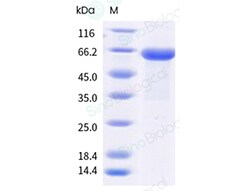
Sino Biological Recombinant Human DcR3/TNFRSF6B Protein (hFc Tag), Biotinylated
A DNA sequence encoding the Human TNFRSF6B (O95407) (Met1-His300) was expressed with the Fc region of human IgG1 at the C-terminus. The purified protein was biotinylated in vitro.

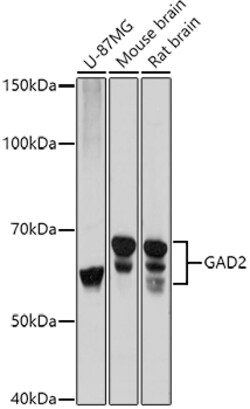
ABclonal Technology GAD65/GAD2 Rabbit pAb

This gene encodes one of several forms of glutamic acid decarboxylase, identified as a major autoantigen in insulin-dependent diabetes. The enzyme encoded is responsible for catalyzing the production of gamma-aminobutyric acid from L-glutamic acid. A pathogenic role for this enzyme has been identified in the human pancreas since it has been identified as an autoantibody and an autoreactive T cell target in insulin-dependent diabetes. This gene may also play a role in the stiff man syndrome. Alternative splicing results in multiple transcript variants that encode the same protein.
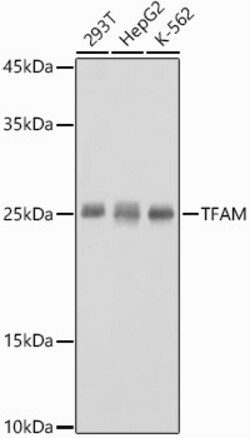
ABclonal Technology TFAM Rabbit pAb
This gene encodes a key mitochondrial transcription factor containing two high mobility group motifs. The encoded protein also functions in mitochondrial DNA replication and repair. Sequence polymorphisms in this gene are associated with Alzheimers and Parkinsons diseases. There are pseudogenes for this gene on chromosomes 6, 7, and 11. Alternative splicing results in multiple transcript variants.

Genscript Corporation CD27 Ligand/CD70 Trimer His
CD70 also named CD27 ligand (CD27L) is a type II transmembrane glycoprotein belonging to the TNF superfamily (TNFSF) and has been designated TNFSF7 CD70 is a cytokine that binds to CD27 Plays a role in T-cell activation Induces the proliferation of costimulated T-cells and enhances the generation of cytolytic T-cells

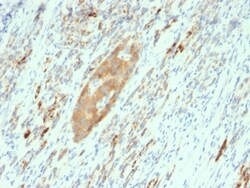
Biotium GAD2 / GAD65 (GABAergic Neuronal Marker)(GAD2/2362), CF568 conjugate, 0.1mg/mL
This MAb recognizes a protein of 65 kDa, which is identified as glutamic acid decarboxylase 2 (GDA2). It is responsible for catalyzing the production of gamma-aminobutyric acid from L-glutamic acid. There are two forms of glutamic acid decarboxylases (GAD's) that are found in the brain: GAD2 (also known as GAD65) and GAD1 (also known as GAD67). GAD1 and GAD2 are members of the group II decarboxylase family of proteins and are responsible for catalyzing the rate-limiting step in the production of GABA (-aminobutyric acid) from L-glutamic acid. Although both GAD's are found in the brain, GAD2 localizes to synaptic vesicle membranes in nerve terminals, while GAD1 is distributed throughout the cell. A pathogenic role for GAD2 is identified in the human pancreas since it has been identified as an autoantibody and an auto-reactive T cell target in insulin-dependent diabetes. Primary antibodies are available purified, or with a selection of fluorescent CF Dyes and other labels. CF Dyes
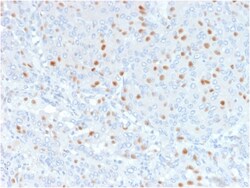
Biotium Annexin A1 / (Hairy Cell Leukemia Marker)(6E4/3), CF740 conjugate, 0.1mg/mL
Annexin A1 belongs to the annexin family. It plays a role in glucocorticoid-mediated down-regulation of the early phase of the inflammatory response. In resting conditions Annexin A1 is localized to the cytoplasm. Upon activation it is mobilized to the membrane and secreted. Annexin A1 and contains 4 annexin repeats. A pair of annexin repeats may form one binding site for calcium and a phospholipid. Expression of the ANXA1 gene is upregulated in hairy cell leukemia (HCL). Detection of ANXA1 provides a simple, highly sensitive and specific assay for diagnosing HCL. Annexin A1 has also been found to be protective against DNA damage induced by heat in breast cancer cells, suggesting it is involved in tumor suppressive and protective activities, and also is associated with treatment resistance. Primary antibodies are available purified, or with a selection of fluorescent CF Dyes and other labels. CF Dyes offer exceptional brightness and photostability. Note: Conjugates of blue fluo
Genscript Corporation FGL1 Fc Chimera Human
FGL1 (Fibrinogen-like protein 1) also known as hepatocyte-derived fibrinogen-related protein 1 (HFREP-1) HP-041 hepassocin (HPS) and liver fibrinogen-related protein 1 (LFIRE-1) is a liver-specific secreted protein belonging to the fibrinogen superfamily whose members share a fibrinogen domain at their C-termini FGL1 is an immune suppressive molecule that inhibits the activation of antigen-specific T cells by acting as a major ligand of LAG3 and binds LAG3 independently of MHC class II

Medchemexpress LLC CANT1 Human HEK293 50ug
CANT1 is a calcium-dependent nucleotidase that shows a clear preference for UDP and the order of its enzymatic activity is UDP GDP UTP GTP It is worth noting that it has little activity on ADP and even less activity on ATP but it does not hydrolyze AMP and GMP CANT1 Protein Human (HEK293 His) is the recombinant human-derived CANT1 protein expressed by HEK293 with N-His labeled tag
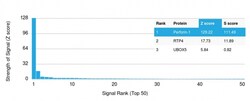
Biotium Perforin-1 (Pore Forming Protein) (Apoptosis Marker)(PRF1/2467), CF568 conjugate, 0.1mg/mL
Perforin is a pore-forming protein that leads to osmotic lysis of the target cells and subsequently enables granzymes to enter the target cells and activate apoptosis. Perforin has structural and functional similarities to complement component 9 (C9). Like C9, this protein creates transmembrane tubules and is capable of lysing non-specifically a variety of target cells. It is one of the main cytolytic proteins of cytolytic granules, and is known to be a key effector molecule for T-cell- and natural killer-cell-mediated cytolysis. Defects in this gene cause familial hemophagocytic lymphohistiocytosis type 2 (HPLH2), a rare and lethal autosomal recessive disorder of early childhood. The expression of perforin is reportedly upregulated in activated CD8 T-cells, natural killer cells and some CD4 T-cells. Primary antibodies are available purified, or with a selection of fluorescent CF Dyes and other labels. CF Dyes offer exceptional brightness and photostability. Note: Conjug
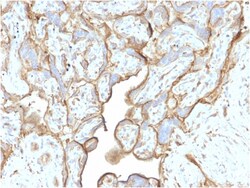
Biotium Annexin A1 / (Hairy Cell Leukemia Marker)(CPTC-ANXA1-1), CF740 conjugate, 0.1mg/mL
Annexin A1 belongs to the annexin family. It plays a role in glucocorticoid-mediated down-regulation of the early phase of the inflammatory response. In resting conditions Annexin A1 is localized to the cytoplasm. Upon activation it is mobilized to the membrane and secreted. Annexin A1 and contains 4 annexin repeats. A pair of annexin repeats may form one binding site for calcium and a phospholipid. Expression of the ANXA1 gene is upregulated in hairy cell leukemia (HCL). Detection of ANXA1 provides a simple, highly sensitive and specific assay for diagnosing HCL. Annexin A1 has also been found to be protective against DNA damage induced by heat in breast cancer cells, suggesting it is involved in tumor suppressive and protective activities, and also is associated with treatment resistance. Primary antibodies are available purified, or with a selection of fluorescent CF Dyes and other labels. CF Dyes offer exceptional brightness and photostability. Note: Conjugates of blue fluo
Biotium S100A9(S100A9/1075), CF640R conjugate, 0.1mg/mL
This MAb stains the cytoplasm of macrophages and histiocytes in hematopoietic organs, Kupffer's cells of the liver and Langerhan's cells of the skin. It also stains the mantle zone B-lymphocytes of the lymph node and spleen, spermatogonia, and chief cells of the stomach. S100A9 is expressed by macrophages in acutely inflamed tissues and in chronic inflammation. It is detected in peripheral blood leukocytes, in neutrophils and granulocytes. It is present at sites of vascular inflammation. S100A9 is also expressed in epithelial cells constitutively or induced during dermatoses. S100A9 is a Calcium-binding protein. It has antimicrobial activity towards bacteria and fungi. It is important for resistance to invasion by pathogenic bacteria. It up-regulates transcription of genes that are under the control of NF-kappa-B. S100A9 plays a role in the development of endotoxic shock in response to bacterial lipopolysaccharide (LPS). It promotes tubulin polymerization when unphosphorylate
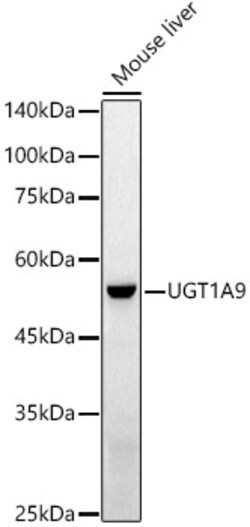
ABclonal Technology UGT1A9 Rabbit pAb
This gene encodes a UDP-glucuronosyltransferase, an enzyme of the glucuronidation pathway that transforms small lipophilic molecules, such as steroids, bilirubin, hormones, and drugs, into water-soluble, excretable metabolites. This gene is part of a complex locus that encodes several UDP-glucuronosyltransferases. The locus includes thirteen unique alternate first exons followed by four common exons. Four of the alternate first exons are considered pseudogenes. Each of the remaining nine 5 exons may be spliced to the four common exons, resulting in nine proteins with different N-termini and identical C-termini. Each first exon encodes the substrate binding site, and is regulated by its own promoter. The enzyme encoded by this gene is active on phenols.
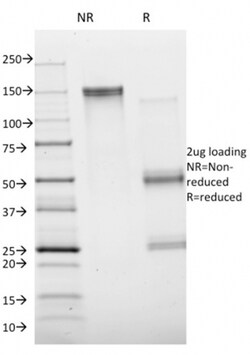
Biotium Annexin A1 / (Hairy Cell Leukemia Marker)(ANXA1/1672), CF740 conjugate, 0.1mg/mL
Annexin A1 belongs to the annexin family. It plays a role in glucocorticoid-mediated down-regulation of the early phase of the inflammatory response. In resting conditions Annexin A1 is localized to the cytoplasm. Upon activation it is mobilized to the membrane and secreted. Annexin A1 and contains 4 annexin repeats. A pair of annexin repeats may form one binding site for calcium and a phospholipid. Expression of the ANXA1 gene is upregulated in hairy cell leukemia (HCL). Detection of ANXA1 provides a simple, highly sensitive and specific assay for diagnosing HCL. Annexin A1 has also been found to be protective against DNA damage induced by heat in breast cancer cells, suggesting it is involved in tumor suppressive and protective activities, and also is associated with treatment resistance. Primary antibodies are available purified, or with a selection of fluorescent CF Dyes and other labels. CF Dyes offer exceptional brightness and photostability. Note: Conjugates of blue

Medchemexpress LLC CD79B protein, rat (HEK293, His-tag) | >95.0% | 100 UG
Recombinant rat CD79B (Igβ) expressed in HEK293 cells and supplied as a lyophilized C-terminal 6xHis-tagged protein for research use. The product is >95.0% pure by reducing SDS-PAGE, has an observed molecular weight of approximately 25-30 kDa due to glycosylation, and is lyophilized from PBS (pH 7.4). It is suitable for in vitro applications including antibody validation, biochemical characterization, and assay development.
- Recombinant rat protein expressed in HEK293 cells.
- C-terminal 6xHis tag for convenient detection and purification.
- Purity greater than 95.0% as determined by reducing SDS-PAGE.
- Observed molecular weight approximately 25-30 kDa (glycosylated).
- Lyophilized formulation from PBS, pH 7.4, for shelf stability.
- Stable when frozen; aliquot and store at -20°C or -80°C after reconstitution.
- Recommended reconstitution concentration is at least 100 μg/mL in ddH2O.

ABclonal Technology MCM2 Rabbit pAb
The protein encoded by this gene is one of the highly conserved mini-chromosome maintenance proteins (MCM) that are involved in the initiation of eukaryotic genome replication. The hexameric protein complex formed by MCM proteins is a key component of the pre-replication complex (pre_RC) and may be involved in the formation of replication forks and in the recruitment of other DNA replication related proteins. This protein forms a complex with MCM4, 6, and 7, and has been shown to regulate the helicase activity of the complex. This protein is phosphorylated, and thus regulated by, protein kinases CDC2 and CDC7. Multiple alternatively spliced transcript variants have been found, but the full-length nature of some variants has not been defined.